Begin with the broadest word that fits
You might know you feel good, low, unsettled, or somewhere in between before you can name anything more specific. That is a useful starting point. A check-in is a description of this moment, not a test you need to pass.
Try a few nearby words
If “happy” feels too broad, perhaps hopeful, relieved, or grateful is closer. If “bad” is all you have, you might explore whether disappointed, worried, or frustrated fits. Keep the word that sounds like your experience; there is no need to force a label.
Make room for two things at once
You can be excited about something new and uneasy about what changes. You can feel grateful for a person and frustrated by a conversation. Write both if both are present.
Add a little context
A few words about what was happening can make a check-in easier to understand when you return to it. Try “I felt ___ when ___.” You do not have to explain the feeling away or solve it.
Explore the feeling wheel in Still
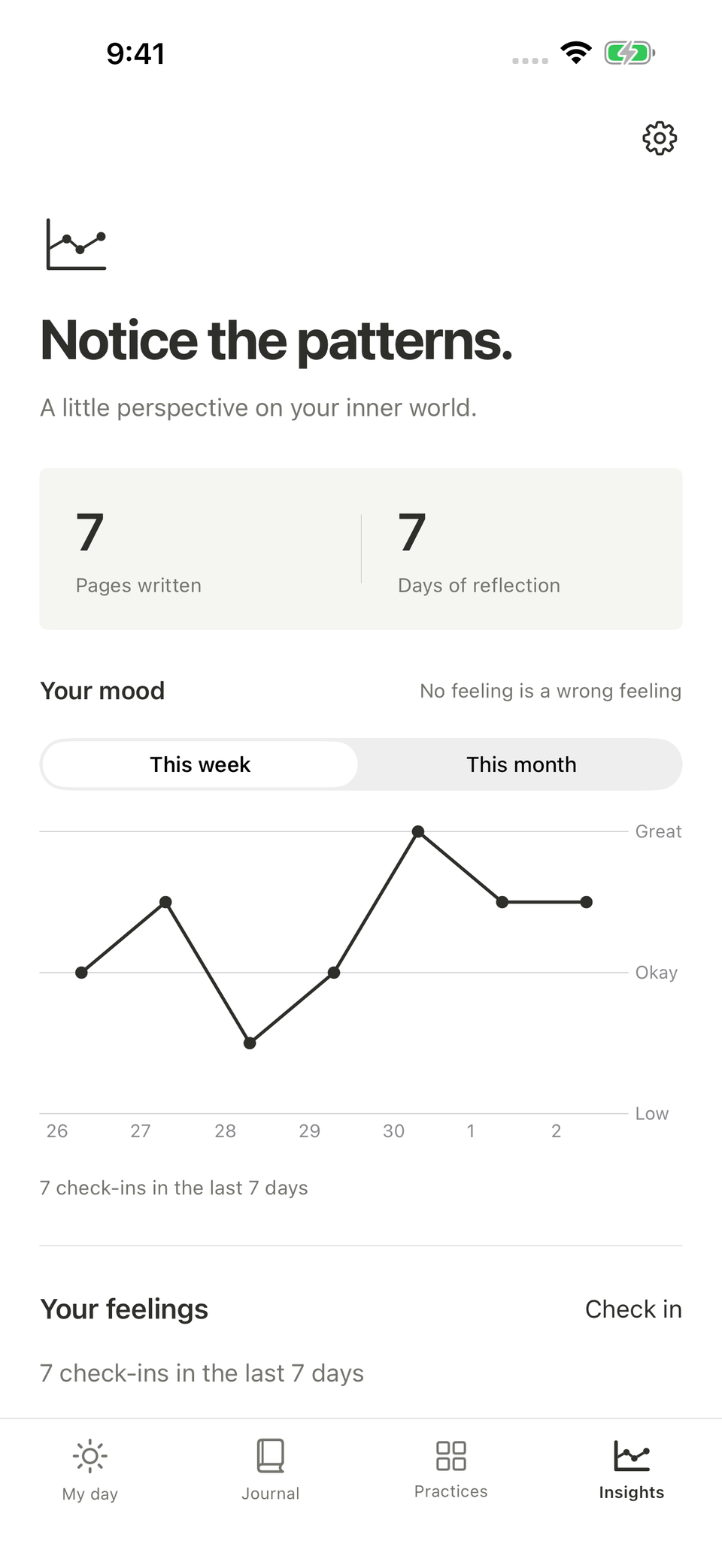
Still offers a simple daily mood check-in and a feeling wheel with six feeling families. You can select several feelings and add a note. Your check-ins stay on your device, and you can edit or delete them later.